Same Drug, Different Price Tag: The Clinical and Financial Truth About Generic vs. Brand-Name ED Medications
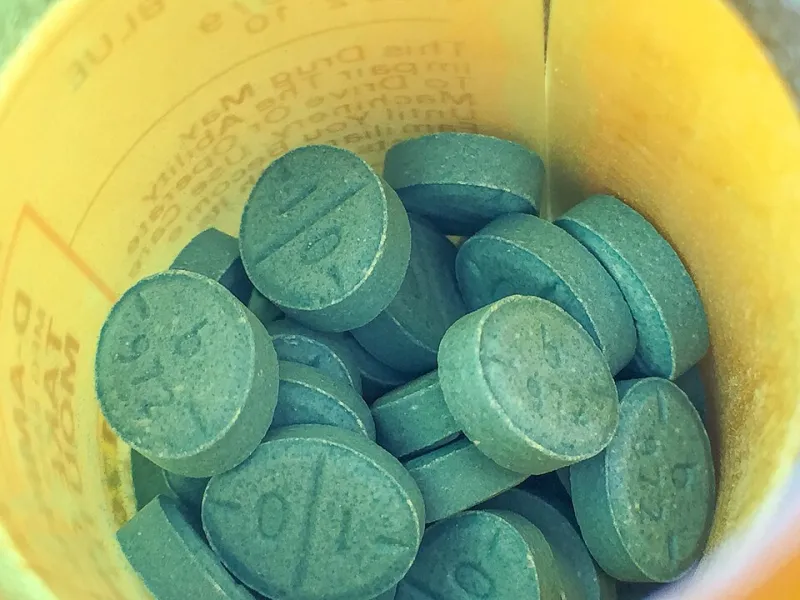
Photo: Tony Webster from Minneapolis, Minnesota, United States, CC BY 2.0, via Wikimedia Commons
Walk into any American pharmacy with a prescription for erectile dysfunction, and you will immediately face a choice that feels more financial than medical: the brand-name version, or the generic. The price difference can be staggering — sometimes exceeding $30 per pill versus under $1 for the chemically equivalent alternative. For millions of men managing ED alongside mortgages, healthcare premiums, and everyday expenses, that gap is not trivial. But before assuming the cheaper option is inherently inferior, or conversely that the expensive brand carries some hidden clinical advantage, it is worth examining what the science and regulatory framework actually say.
What the FDA Actually Requires of Generic Medications
The foundation of any honest comparison between generic and brand-name ED drugs begins with understanding how the U.S. Food and Drug Administration evaluates generic medications before they reach pharmacy shelves.
When a pharmaceutical company applies to market a generic drug, the FDA requires demonstration of bioequivalence — meaning the generic formulation must deliver the same active ingredient into the bloodstream at the same rate and to the same extent as the original brand. For sildenafil (the active ingredient in Viagra) and tadalafil (the active ingredient in Cialis), this means generic manufacturers must prove their tablets produce blood concentration curves that fall within an 80 to 125 percent range of the brand-name reference product.
Critically, the FDA also mandates that generic manufacturers meet identical standards for purity, potency, and manufacturing quality. The agency inspects generic production facilities with the same scrutiny applied to brand-name plants, including international facilities supplying the U.S. market. What generics are not required to replicate are inactive ingredients — the binders, fillers, and coatings that give a pill its color, shape, and coating. These differences are cosmetic and, in the vast majority of patients, clinically inconsequential.
The practical conclusion: generic sildenafil and generic tadalafil are not approximations of Viagra and Cialis. They are, by regulatory definition and pharmacological function, the same medicines.
The Real Drivers Behind the Price Gap
Understanding why brand-name ED medications cost so much more requires a brief look at pharmaceutical economics rather than chemistry.
Pfizer introduced Viagra in 1998, and Eli Lilly launched Cialis in 2003. Both companies held exclusive patents on their respective compounds for roughly 20 years, during which time no competitor could legally manufacture the same active ingredient. That exclusivity period allowed both companies to recoup enormous research, development, and marketing investments — and to generate substantial profit margins.
When those patents expired — sildenafil's primary U.S. patent lapsed in 2017, tadalafil's in 2018 — multiple manufacturers entered the market simultaneously, triggering the kind of price competition that has historically driven generic costs down by 80 to 90 percent within a few years of patent expiration. Today, generic sildenafil is available through major U.S. pharmacy chains and telehealth platforms for as little as $0.50 to $2.00 per dose depending on strength and quantity, while brand-name Viagra can still retail above $60 per pill without insurance.
Brand-name manufacturers typically maintain pricing by marketing directly to consumers and physicians, emphasizing familiarity and trust built over decades. For some men, particularly those who had success with a brand-name product before generics became available, there is a psychological comfort in continuing with what they know. That preference is valid, but it should be recognized as a preference rather than a clinical necessity.
Insurance Coverage: A Patchwork Reality
Insurance coverage for ED medications in the United States remains inconsistent and, for many men, frustrating. Most standard commercial health insurance plans and Medicare Part D formularies have historically excluded or significantly restricted coverage for erectile dysfunction drugs, classifying them as "lifestyle" medications rather than medically necessary treatments.
Where coverage does exist, it more commonly applies to generic versions. Some Part D plans cover generic tadalafil when prescribed for benign prostatic hyperplasia (BPH) — a condition for which tadalafil is FDA-approved at a specific dose — while declining to cover the same molecule prescribed for ED. Men whose ED has a documented organic cause, such as post-prostatectomy nerve damage or diabetes-related vascular dysfunction, may have stronger grounds for coverage appeals, though outcomes vary by insurer.
For men without coverage, manufacturer savings programs (offered by Pfizer and Lilly for their brand products) and discount pharmacy services such as GoodRx can reduce out-of-pocket costs meaningfully. Telehealth platforms specializing in men's health have also disrupted traditional pricing by offering generic sildenafil and tadalafil through subscription models at significantly reduced per-dose costs compared to traditional retail pharmacy pricing.
Practical Considerations When Choosing Between Options
For most men, the clinical case for choosing a generic over a brand-name ED medication is straightforward. However, several individual factors are worth discussing with a prescribing physician.
Formulation differences matter for tadalafil. Tadalafil is available in two distinct clinical applications: a 10mg or 20mg tablet taken as needed (equivalent to brand-name Cialis), and a 2.5mg or 5mg daily tablet for continuous coverage. The choice between these formulations affects cost, spontaneity, and how the drug fits into a man's lifestyle — regardless of brand versus generic status.
Inactive ingredient sensitivities are rare but real. A small number of patients report tolerability differences between brand and generic formulations, most commonly attributed to differences in inactive ingredients. If a man switches to a generic and notices unexpected gastrointestinal discomfort or altered onset timing, discussing a formulary switch with his pharmacist or physician is reasonable.
Counterfeit risk in unregulated channels is serious. The price advantages of generics are only meaningful when purchasing from licensed U.S. pharmacies or legitimate telehealth providers. The FDA has documented widespread adulteration and misrepresentation in ED medications sold through unverified online sources. Purchasing from any source that does not require a valid prescription is both legally problematic and potentially dangerous.
Making an Informed Decision
The choice between generic and brand-name ED medication ultimately reduces to a straightforward cost-benefit calculation for the majority of men. The active pharmaceutical ingredient is identical. The regulatory standards are equivalent. The clinical outcomes in peer-reviewed literature show no meaningful efficacy difference between bioequivalent formulations.
What differs is price — sometimes by a factor of 30 or more. For a chronic condition like erectile dysfunction, where treatment may continue for years or decades, those savings compound significantly over time.
That said, the most important variable in any ED treatment decision is not the brand on the label but the quality of the conversation between a man and his healthcare provider. Dosing, frequency, potential drug interactions, and underlying cardiovascular health all require individualized clinical judgment that no price comparison can replace. Generic medications offer an evidence-based, cost-effective path to the same therapeutic outcome — but that outcome still depends on the right medication, at the right dose, for the right patient.