The Generic ED Pill Audit: Separating Real Savings From Counterfeit Risk in 2026
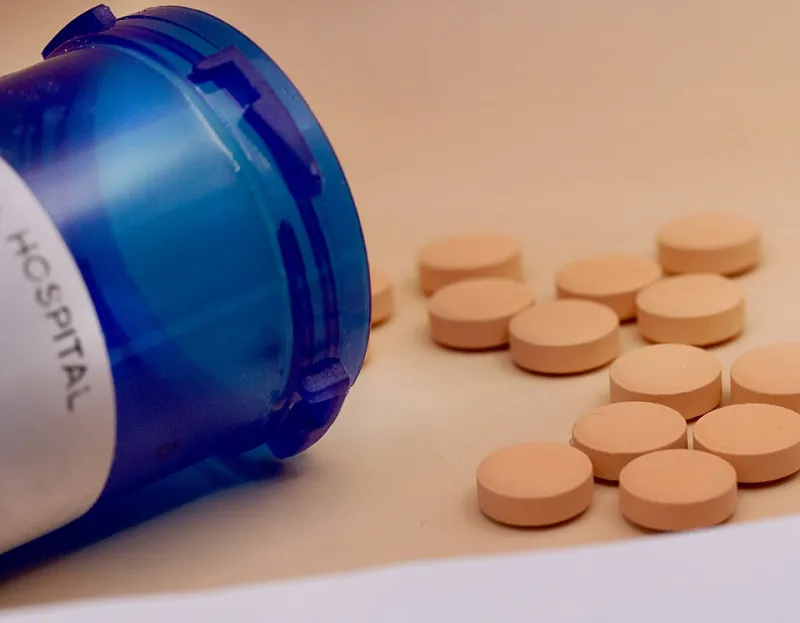
Photo: NIAID, CC BY 2.0, via Wikimedia Commons
For men comparing erectile dysfunction prescriptions in 2026, the price spread can be startling. A branded tablet and a generic tablet may contain the same active molecule, yet one costs several times more at the pharmacy counter. At Cialice Health, the useful question is not simply whether generic ED medication is cheaper. It is whether the specific product in front of you is a legitimate equivalent, dispensed through a supply chain you can trust.
What Bioequivalence Does and Does Not Promise
The FDA approves generic prescription drugs through an abbreviated new drug application. A generic must contain the same active ingredient, at the same strength, in the same dosage form, by the same route of administration, and for the same conditions of use as the brand-name reference product. It must also demonstrate bioequivalence: the rate and extent of absorption generally must fall within an accepted statistical range, commonly described as the 80 to 125 percent confidence interval for key measures such as AUC and Cmax.
That standard is meaningful. It means an FDA-approved generic is not supposed to be a loose approximation. It must meet the same quality, purity, and potency specifications, and its manufacturing site is subject to FDA inspection. What bioequivalence does not promise is a byte-for-byte identical tablet. Inactive ingredients may differ. Color, shape, coating, and packaging may differ. For most men, those differences are not clinically important. For men with specific sensitivities, they can matter.
Where the Real Differences Live
Inactive ingredients are the first place to look if you have a history of allergy or gastrointestinal sensitivity. Fillers, binders, coatings, and dyes can vary between approved products. If you have reacted to a specific dye or excipient before, compare the labels with your pharmacist rather than assuming all generics are interchangeable in your body.
Release formulation is the second issue. Immediate-release sildenafil and vardenafil are not the same as once-daily tadalafil, and a generic must match the release profile of the brand product it references. Still, men should confirm what they are receiving. A once-daily tadalafil product is not the same dosing strategy as an as-needed tablet, and tablets should not be split or crushed unless the labeling or a pharmacist says it is appropriate. Appearance can change from one refill to the next without indicating a counterfeit, but the label, strength, and manufacturer information should remain clear and consistent.
Insurance, Coupons, and the Pharmacy Counter
Price is not a single number. Formulary tiers, prior authorization rules, brand-name copay cards, and pharmacy discount programs can make the branded product cheaper than the generic for one patient and far more expensive for another. Generic substitution laws also vary by state. Ask the pharmacist for the cash price as well as the insurance price, and compare the cost per dose rather than the cost per pill.
The source matters as much as the price. A neighborhood pharmacy, a reputable telehealth-connected pharmacy, and an accredited online pharmacy are not the same as an unverified website that promises a prescription after a short questionnaire. For online sellers, look for state licensure and recognized accreditation such as VIPPS or LegitScript. A legitimate pharmacy will not pressure you to skip a clinician or import an unapproved product from an unknown source.
Counterfeit and Gray-Market Red Flags
A counterfeit product may contain the wrong active ingredient, an incorrect dose, or contaminants. A gray-market product may be genuine but stored or shipped outside the controlled supply chain. Either situation can turn a cost-saving decision into a safety problem.
Warning signs include no valid prescription requirement, prices far below the established market, unsolicited email offers, websites that obscure their location or licensure, packaging with misspellings or missing lot and expiration information, pills that look or feel different from a verified refill, and unexpected side effects. Do not assume that a product is safe because it arrives in blister packs or because the website uses medical imagery.
A Practical Audit Before You Switch
- Confirm the active ingredient and strength on the label. 2. Confirm that the product is an FDA-approved generic, not an unapproved import. 3. Verify the pharmacy's licensure and, for online sellers, its accreditation. 4. Compare inactive ingredients if you have known sensitivities. 5. Confirm the release formulation and dosing schedule. 6. Check expiration dates and lot numbers. 7. Calculate cost per dose, not per pill. 8. Tell your clinician if your response changes after a switch.
The Bottom Line
A generic ED medication can be a smart, clinically appropriate, lower-cost choice when it comes from a regulated source and matches the prescription your clinician intended. Not every cheap pill is an equal swap. The disciplined approach is to verify the product, the pharmacy, and the formulation, then treat any change in effect or side effects as a reason to revisit the conversation with a clinician.